Spring Bank Farm, Frome
Project Overview
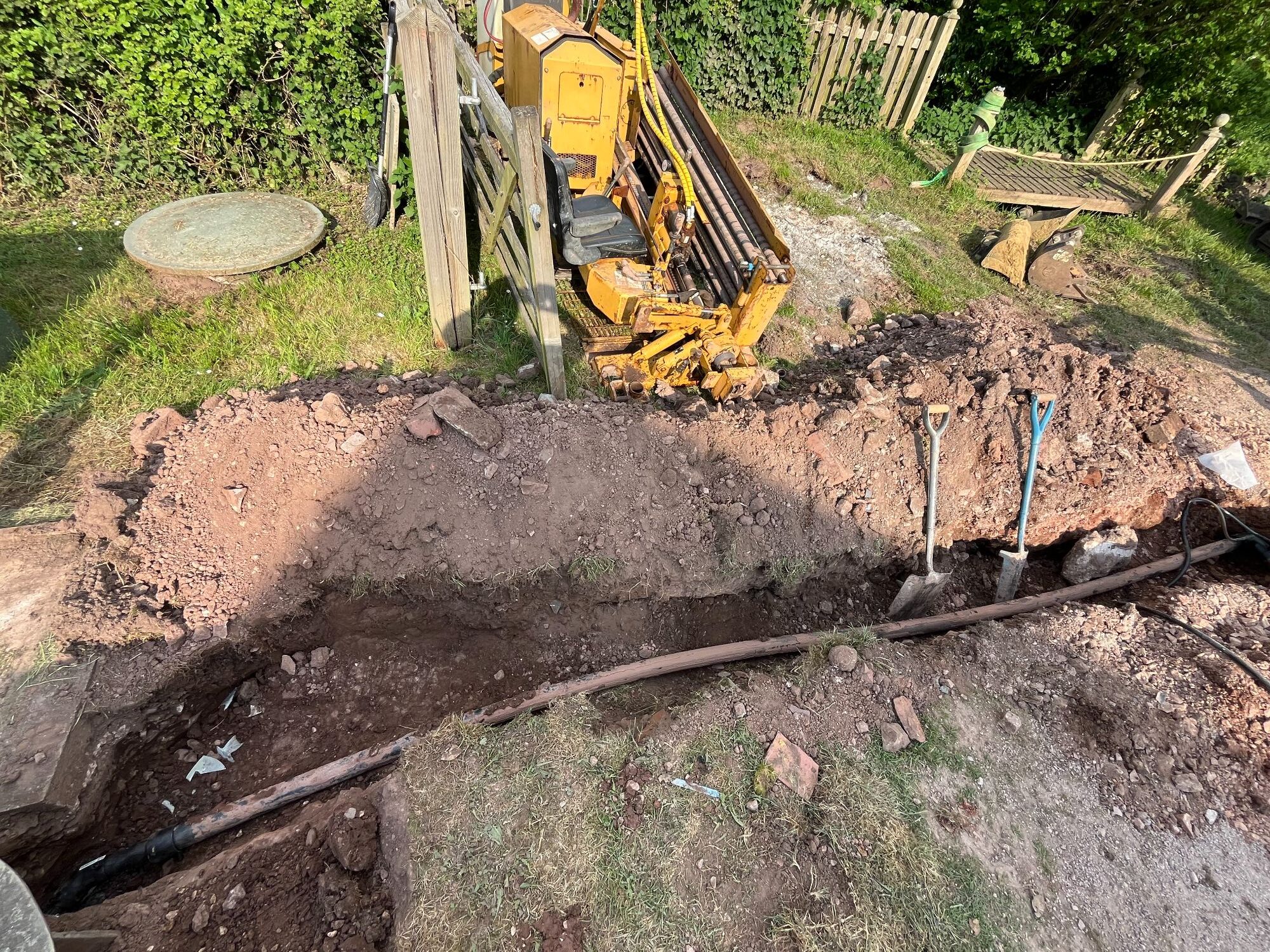
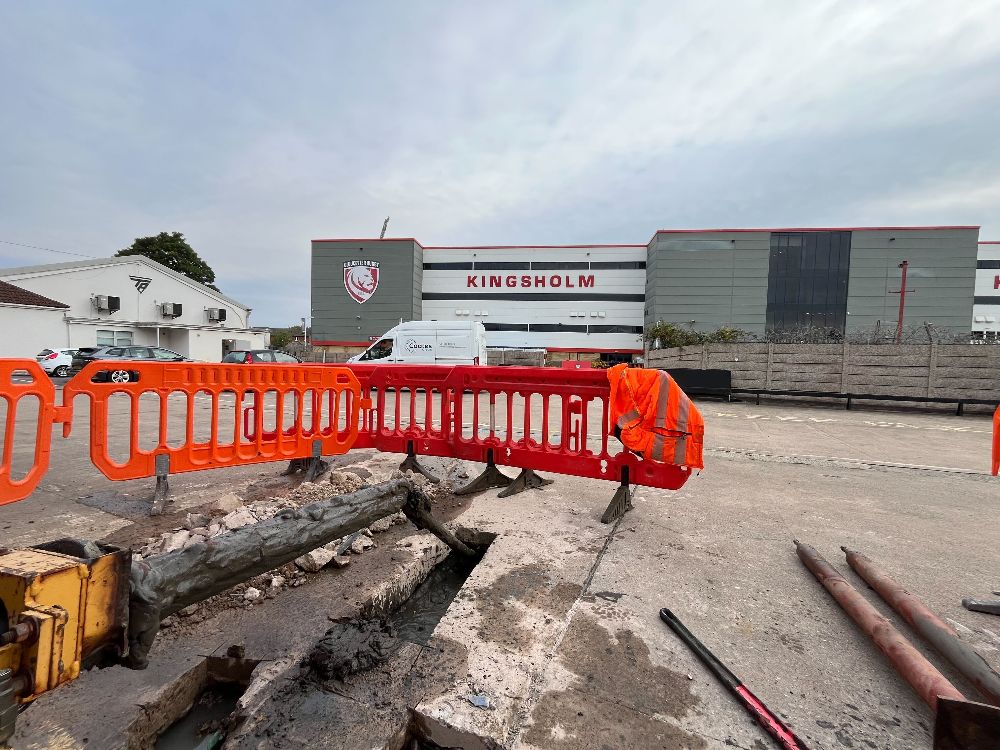
To improve slurry management and operational efficiency, a farm required the installation of a 160mm MDPE pipe beneath a public road. This pipeline would allow slurry to be pumped directly from the lagoon to nearby fields without the need for over-road hoses or ramps. Horizontal Directional Drilling (HDD) was used to avoid road closures and maintain uninterrupted access.
Client: Private Agricultural Operation
Location: Spring Bank Farm, Frome, Somerset
Duration: 2 days
Method: Horizontal Directional Drilling (HDD)
Length: ~50 meters
Pipe Installed: 160mm MDPE SDR17
Soil Conditions: Rocky and cobble-heavy subgrade
Challenges & Solutions
- Tough Ground Conditions: The rocky and cobble-filled soil created difficult drilling conditions. The crew used specially selected drill heads and adjusted drilling pressures for better cut and fluid circulation.
- Gradient Alignment: The fields on either side of the road were on different elevations, complicating the ability to hit the pre-dug entry and exit pits accurately. Precision locating and multiple pilot adjustments ensured alignment was maintained.
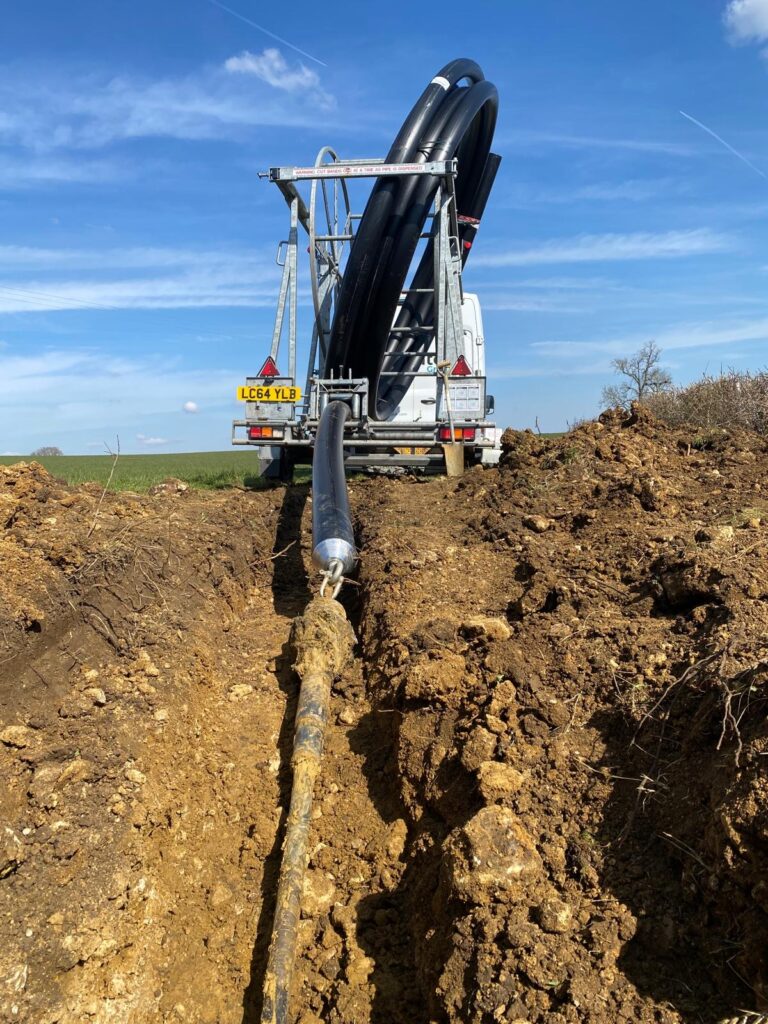
- Pipe Diameter Transition: A 90mm pilot bore was initially drilled, followed by a 200mm back ream to accommodate the 160mm pipe. Drill fluid management was critical to maintaining bore integrity with the sandy conditions.
Execution Strategy
- Step-Ream Approach: To minimize risk in the rocky ground, the pilot bore was incrementally reamed using intermediate sizes before final expansion to 200mm.
- Safe Pipe Pullback: The 160mm pipe was successfully pulled back in one continuous section, using high-torque swivels to prevent twisting.
- Professional Finishing: The team completed the installation with fusion-welded flanges, allowing secure connection to 6″ slurry pipe connectors.
Outcome
The slurry pipeline was successfully installed with no road excavation or public disruption. This system now enables the farmer to pump slurry directly to fields without repeated road crossings, reducing fuel costs, improving safety, and eliminating the need for temporary hose ramps. The project has led to long-term savings and increased operational efficiency across the farm.