Project Overview
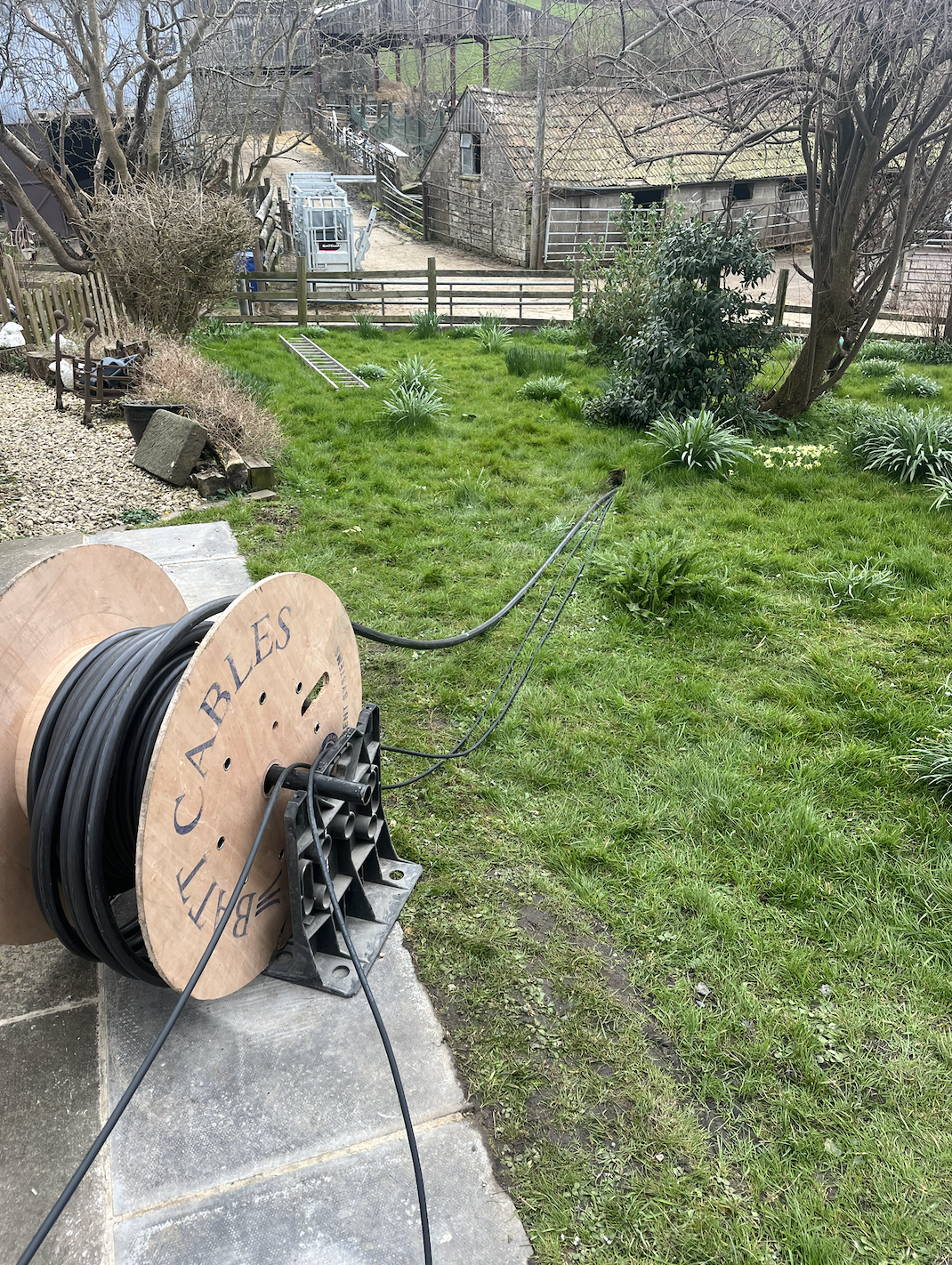
A horizontal directional drilling (HDD) project was undertaken in Bicester on behalf of Thames Water to install approximately 2 km of 250 mm MDPE water pipework. The route extended across five separate agricultural fields, making a trenchless solution essential to minimise disruption and preserve the usability of the land throughout the works.
Challenges
The project involved a number of technical and logistical challenges that required careful planning and execution. Ground conditions across the site were particularly difficult, with large sections of boggy terrain affecting access, setup, and stability during drilling operations.
In addition to this, the programme was constrained to a tight two-week window, leaving little room for delays. Maintaining consistent bore accuracy over long distances was critical, particularly given the multi-field layout, while also ensuring that the surrounding farmland remained largely unaffected. Avoiding traditional open-cut excavation was a key requirement to prevent unnecessary disruption and reinstatement work.
Solution
A directional drilling approach was selected as the most suitable method to meet both the environmental and technical requirements of the project. A 4.5” pilot bore was first completed across each section using a guided drilling system, allowing for precise control of line and level throughout the route.
Following the pilot bore, the hole was progressively enlarged in stages to reduce stress on both the equipment and the surrounding ground. An initial pass was carried out using an 8” reamer, followed by a final pass with a 14” fluted reamer to achieve the required diameter. This staged reaming approach proved particularly effective in the clay conditions, helping to maintain bore integrity and minimise the risk of collapse.
Drilling fluid was carefully managed throughout the process to stabilise the bore and ensure efficient removal of cuttings, especially in the more saturated sections of the site.
Equipment Used
The works were carried out using a mid-size HDD drilling rig, supported by a full drill rod setup and a fluid mixing and recycling system. A 4.5” pilot drill head was used for initial boring, followed by 8” and 14” reamers for staged enlargement. A tracking system was also employed to maintain accurate bore guidance across the full length of the installation.
Results
The project was successfully completed within the two-week timeframe, with the full 2 km of 250 mm MDPE pipe installed as planned. All five field crossings were achieved despite the challenging ground conditions, with bore paths maintained accurately over long distances.
The use of HDD ensured that there was no significant environmental impact, and the surrounding farmland remained largely undisturbed. The works were completed efficiently, with minimal downtime, even in areas where access was restricted.
Key Benefits
The use of horizontal directional drilling eliminated the need for open trenching across agricultural land, significantly reducing disruption and reinstatement requirements. The approach allowed the programme to be maintained despite adverse ground conditions, while also demonstrating the effectiveness of staged reaming in clay soils for maintaining bore stability and performance.
Conclusion
This project highlights the effectiveness of HDD in delivering large-scale pipeline installations in challenging environments. Through careful planning and the use of a 4.5” pilot bore followed by staged reaming with 8” and 14” passes, a stable and efficient installation was achieved for Thames Water within a constrained timeframe.